Booking choice: The guided summit hike, ★ 4.7 (6,028). Check dates Compare the options below
Etna looks like one mountain, but for a hiker it is several. You can stroll round a crater from 1892 next to a car park, ride the lifts to 2,800 m and walk the last stretch, or spend a full day on foot with a guide towards the summit craters. Each asks something different of your legs and your lungs.
This guide sets out the difficulty of each option with real walking times and heights, explains the altitude and the sand descent, and says who should stay lower. Where you may walk on your own is in hiking Etna without a guide, and how the lifts work is in the Etna cable car guide.
The quick answer
Silvestri craters: easy, 30 to 60 minutes, no ticket. Cable car, 4x4 and guide to the 2,900 m area: easy, about 2.5 hours with about 100 m of ascent on foot. Trek without lifts from 1,850 m: moderate, about 550 m of ascent to about 2,400 m. The 3,000 m trek: moderate, 3 to 4 hours of walking in a 5 hour outing. Summit area: demanding, about 2 hours up from 2,800 m, about 6 hours in all. On foot from Rifugio Sapienza to the 2,900 m area: about 1,000 m of ascent, 4 to 6 hours, guide needed above 2,500 m. The hard parts: thin air, cold wind and the descent on loose sand. Skip the summit with heart or breathing problems. Every route depends on the alert level on the day. Cancellation: full refund if you cancel up to 24 hours ahead on every tour listed here.
How hard is the hike up Etna?
Easy to demanding, depending on the height. The walks below about 2,100 m are gentle, the 3,000 m trek is moderate, and the summit area at about 3,300 m and above is a demanding high-altitude hike for fit, healthy walkers.
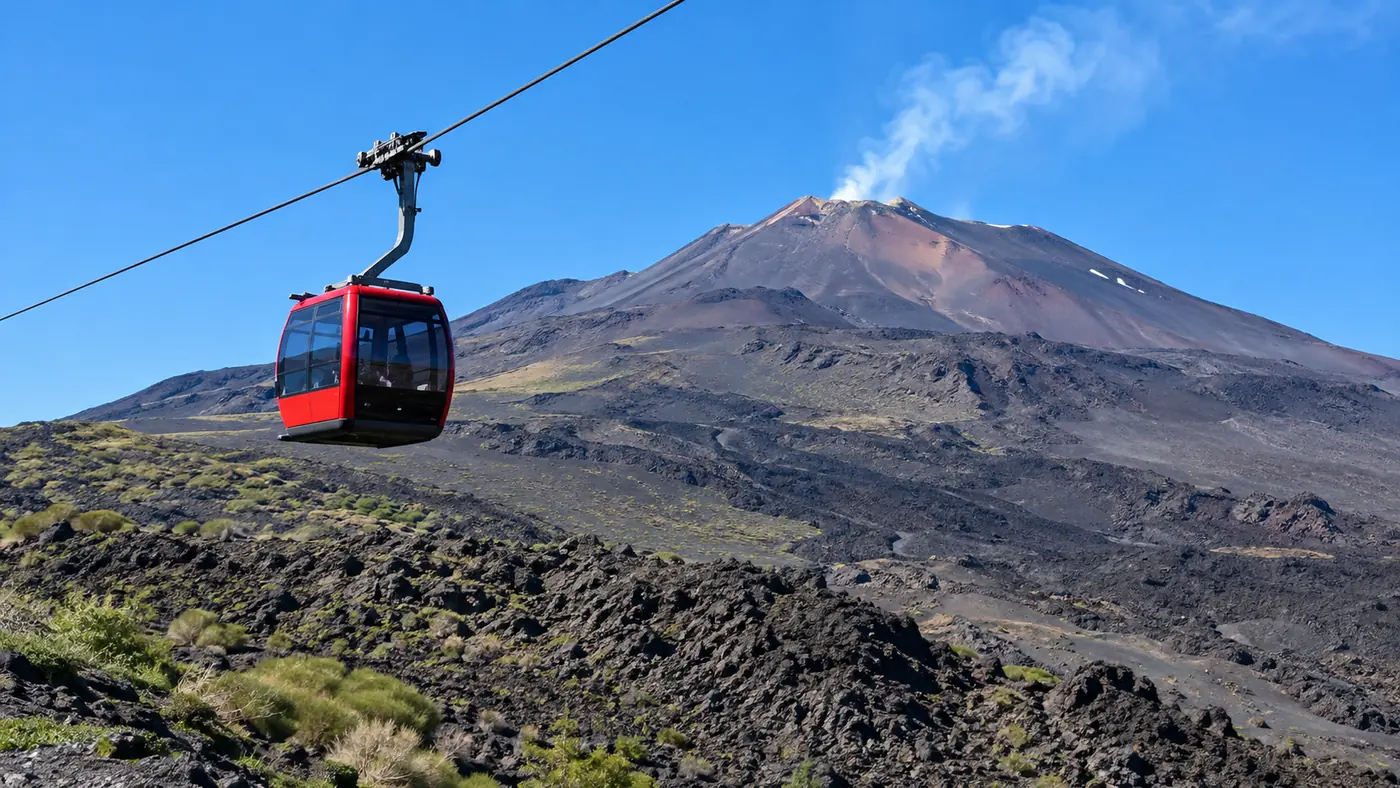
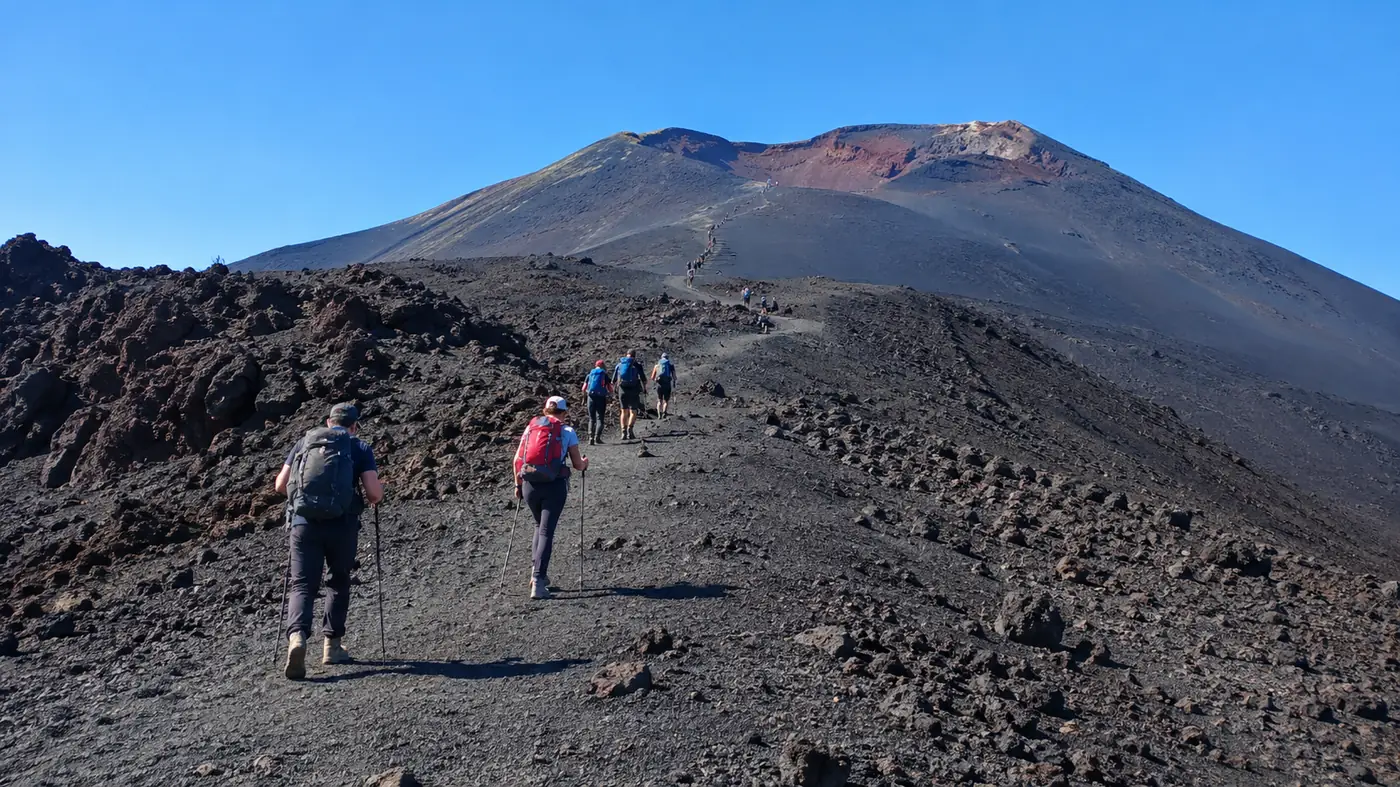
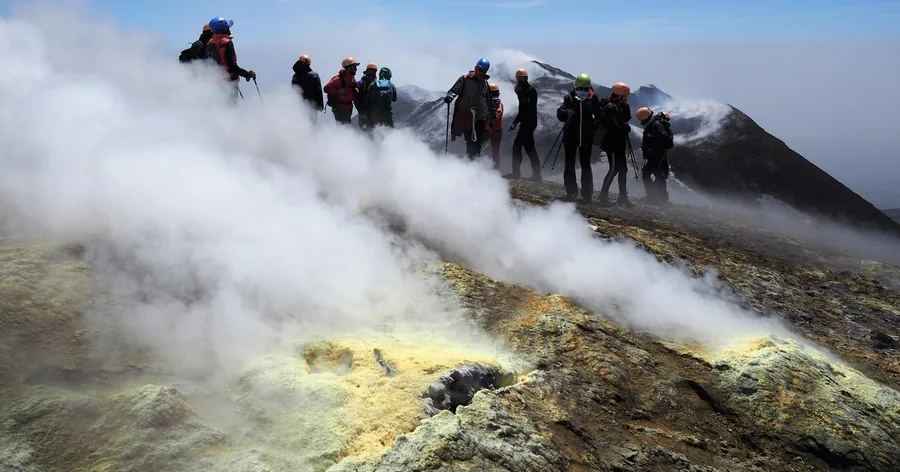
Etna has no single trail to the top. Most people take the Funivia dell'Etna to 2,500 m and then a 4x4 bus towards 2,800 or 2,900 m, so the walking starts high and the ascent on foot is modest: about 200 m on the 3,000 m trek, about 500 m to the summit craters. What makes it hard is not the gradient but where it happens: in thin air, often in a cold wind, on loose scoria and sand that gives way under your boots.
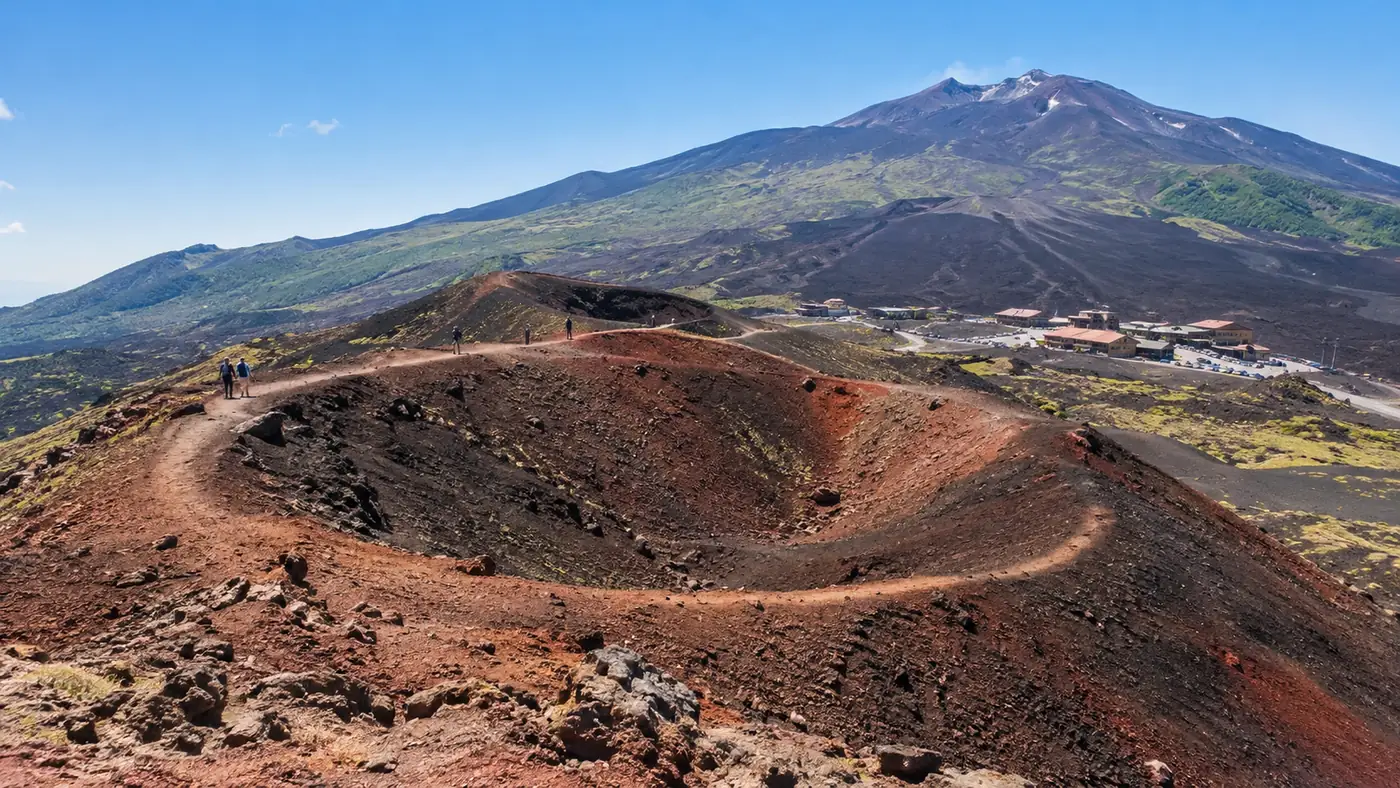
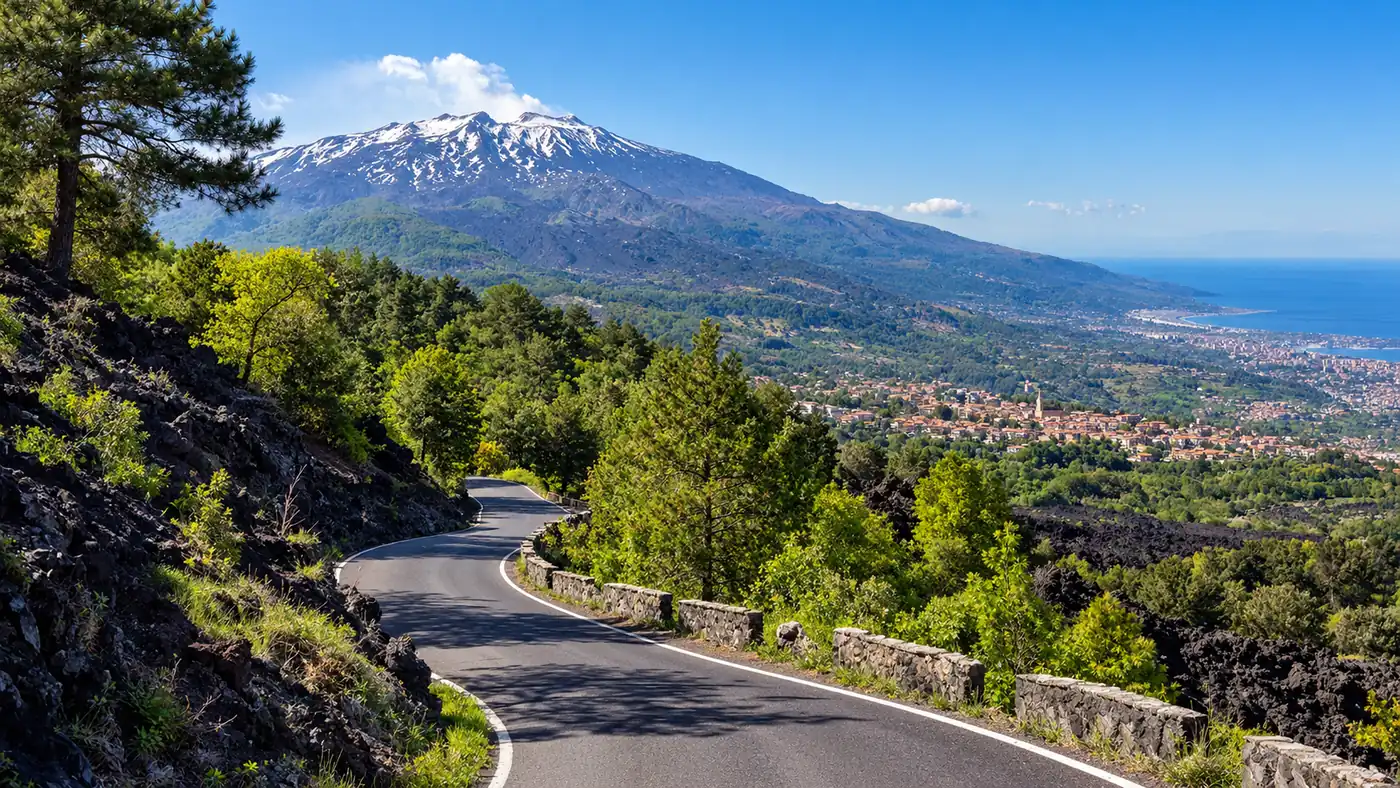
Lower down it is a different volcano. The rims of the Silvestri craters, the nature trails and the crater walks on the most reviewed day tours stay around 1,900 to 2,100 m on firm paths. Most adults of ordinary fitness manage them without trouble, and so do children.
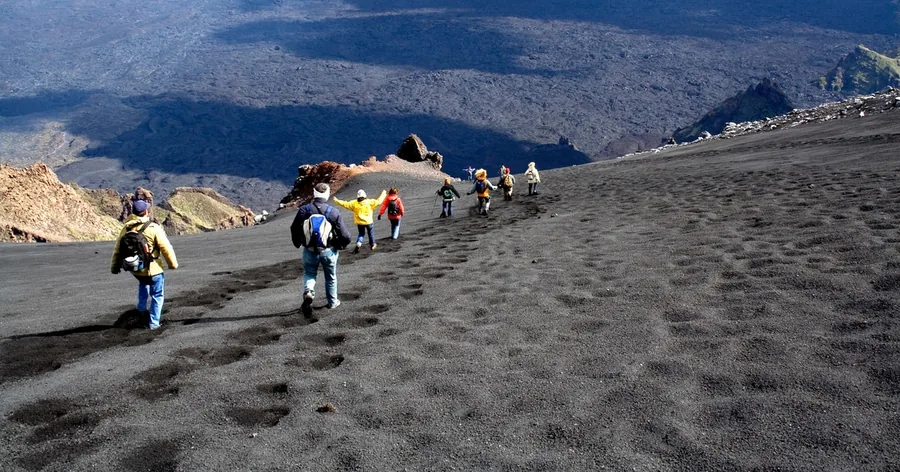
How difficult is each way up Etna?
The table puts the main options side by side, from the Silvestri craters to the summit area. Walking times are for the part on foot; the whole outing is longer.
The figures are typical and come from the operators, the park and the Funivia dell'Etna. The guide adapts the route on the day to the weather and the volcano. Above about 2,500 m on the south side you need an authorised guide, as the guide to hiking without a guide explains.
| Option | Highest point | Walking time | Ascent on foot | Difficulty |
|---|---|---|---|---|
| Silvestri craters, on your own | About 2,000 m | 30 to 60 minutes | About 50 to 100 m | Easy |
| Cable car, 4x4 bus and guide | About 2,900 m | About 40 to 45 minutes (2.5 hours in all) | About 100 m | Easy |
| Trek beyond the tourist trails, no lifts | About 2,400 m | Most of a 7 hour day | About 550 m | Moderate |
| Trek to 3,000 m with cable car and 4x4 | About 3,000 m | 3 to 4 hours | About 200 m, then a long sand descent | Moderate |
| Summit craters from the south | About 3,300 m or higher | About 2 hours up, 6 hours in all | About 500 m from 2,800 m | Demanding |
| Summit trek from Piano Provenzana | About 3,380 m | About 5 hours in all | About 470 m from 2,925 m | Demanding |
| All on foot from Rifugio Sapienza | About 2,900 m | 4 to 6 hours there and back | About 1,000 m | Hard; guide needed above 2,500 m |
How long would it take to climb Mount Etna?
With a guide and the lifts, the hike to the summit area takes about 2 hours up from 2,800 m and fills a day of about 6 hours. The 3,000 m trek is a 5 hour outing with 3 to 4 hours on foot.
The Summit Craters Trek with a Volcano Guide (4.7 from 2,021 reviews) shows the pattern: cable car and 4x4 to 2,800 m, about 2 hours on foot to the summit craters, a walk on the rim of the Central Crater, then down past the Barbagallo craters, 6 hours in all. The Summit Crater Trek to the Bocca Nuova (4.8 from 2,257 reviews) starts from about 2,850 m and heads for the edge of the Bocca Nuova at about 3,300 m in a 5 hour outing. On the north side, the Piano Provenzana hike to 3,380 m has about 470 m to gain on foot from 2,925 m, and it runs only with at least 8 participants.
Doing everything on foot takes far longer. From Rifugio Sapienza at about 1,900 m to the Torre del Filosofo area near 2,900 m is about 1,000 m of ascent and 4 to 6 hours there and back, and the part above 2,500 m is for guided groups only. Whatever you choose, start early: clouds often gather over the summit after midday.
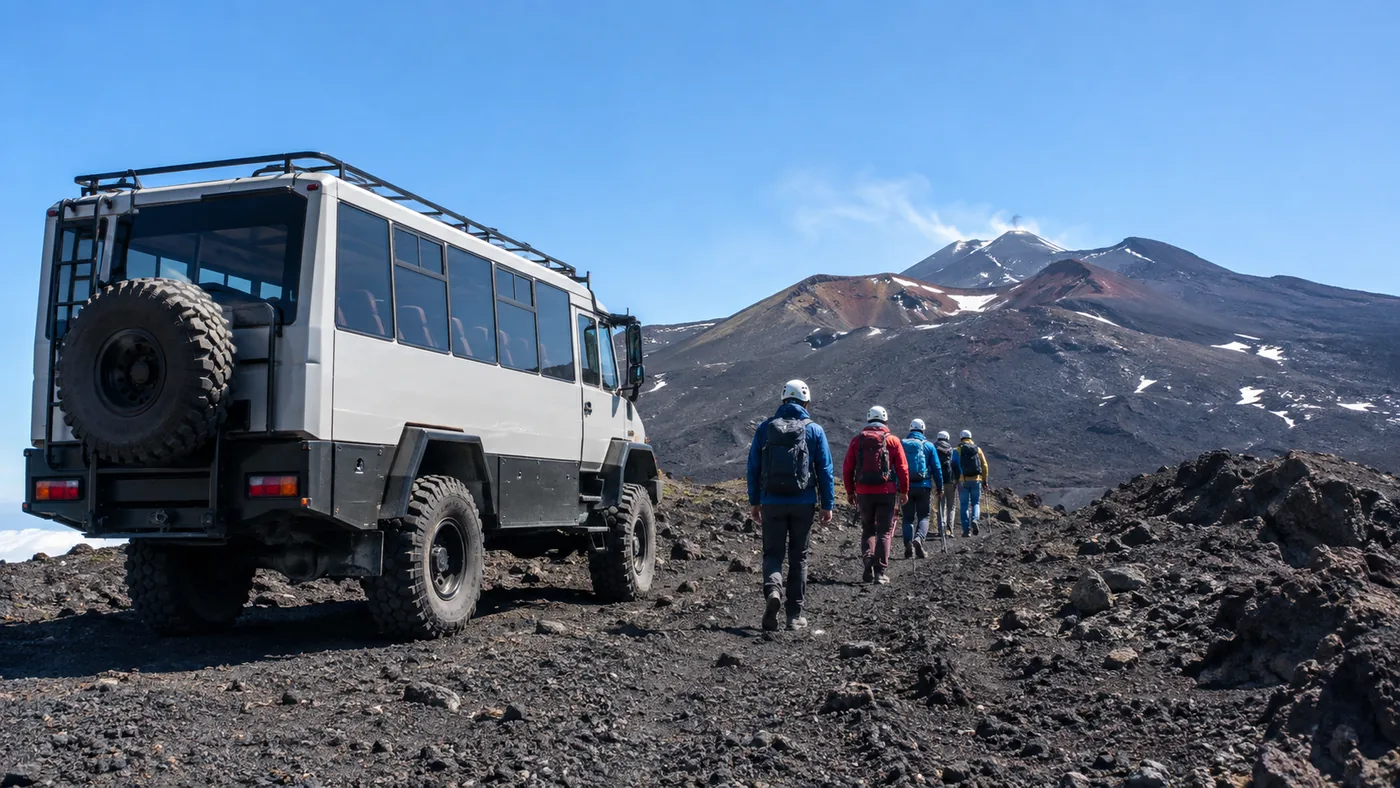
The 3,000 m trek saves your legs with the cable car and 4x4, then gives you 3 to 4 hours on foot with boots, helmet and jacket lent.
Check dates for the 3,000 m trek with cable car and 4x4How does the thin air feel above 2,500 metres?
Most people notice it as shorter breath and heavier legs, not as illness. At 3,000 m each breath holds noticeably less oxygen than at the coast, so a good guide walks slowly and stops often.
You go from sea level to near 3,000 m in a couple of hours, with no time to adapt. Walk at a pace where you can still talk, drink regularly, and tell the guide if you feel dizzy or get a headache. Reviewers of the flagship hike describe it as well paced and tiring, but worth it, which is a fair summary.
The air is cold, too. At about 3,000 m the average is roughly 6 degrees across the year and around 12 to 15 degrees on a summer day, and the temperature falls about 6 to 7 degrees for every 1,000 m you go up. Wind is common and makes it feel colder, and clouds can roll in quickly. For the calm overview of the risks, see is it safe to hike Etna.
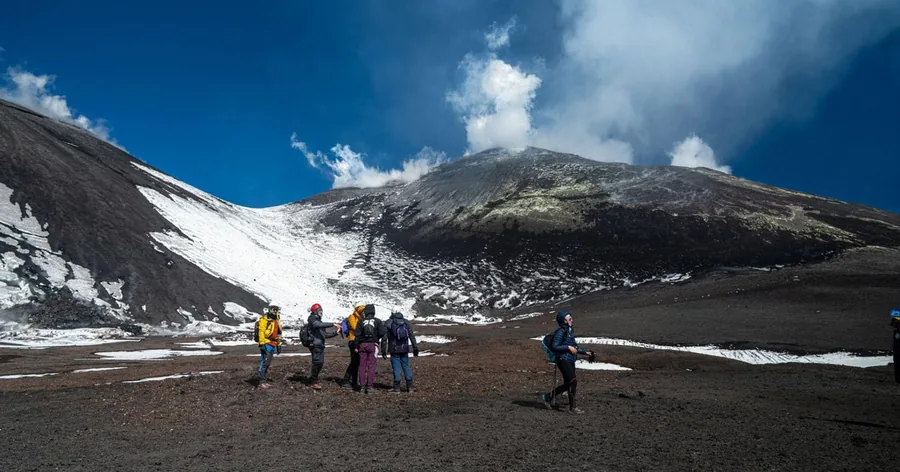
Why is the descent in volcanic sand the hard part?
Because your knees and ankles do the work. The way down on most treks runs over deep, loose volcanic sand: fun for some, tiring for many, and the reason good boots matter as much as fitness.
On the 3,000 m treks and the summit routes, the guide usually leads you down a slope of soft sand above the Valle del Bove rather than the way you came. You sink in to the ankle, take long sliding steps and lose height quickly. Walking poles help, and so do ankle boots that keep the sand out. Trainers fill up within minutes.
The north side has the same kind of descent: the summit trek from Piano Provenzana comes down through sand gullies to Pizzi Deneri. If your knees are weak, tell the guide at the start, so they can set a slower pace and help you on the steepest stretches.
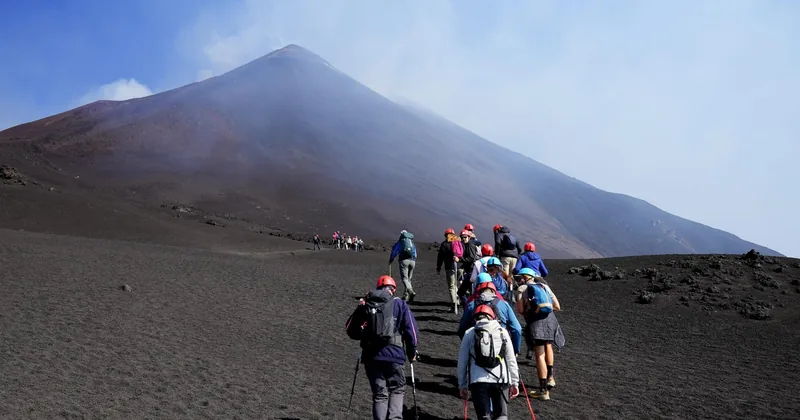
The most booked guided hike: cable car to 2,500 m, then on foot to the Barbagallo craters near 3,000 m, or towards the summit area when the volcano allows, with a volcanological guide, helmet and insurance. Lift ticket paid on the day. Rated 4.7 from 6,028 reviews.
Explore the guided summit hikeWho should skip the summit area?
Anyone with heart or breathing problems, people who struggle on long uphill walks at home, and young children. The operators and the local ordinances say this clearly, and the guides apply it.
The summit routes are for reasonably fit hikers. If you can walk for a few hours in hilly country without trouble, you will usually be fine at a guide's steady pace. The 3,000 m trek is honest about it too: if you are unfit or have breathing problems, you will find it hard work. Several operators ask for long trousers and do not accept shorts.
There is plenty to do lower down. The Etna Trek Beyond the Tourist Trails (4.9 from 1,819 reviews) is a real hike of about 550 m from 1,850 m to about 2,400 m with no lifts, at a gentler altitude. The crater walks with a lava cave and a tasting stay near 2,000 m and suit families; Etna tours compared sets them all side by side.
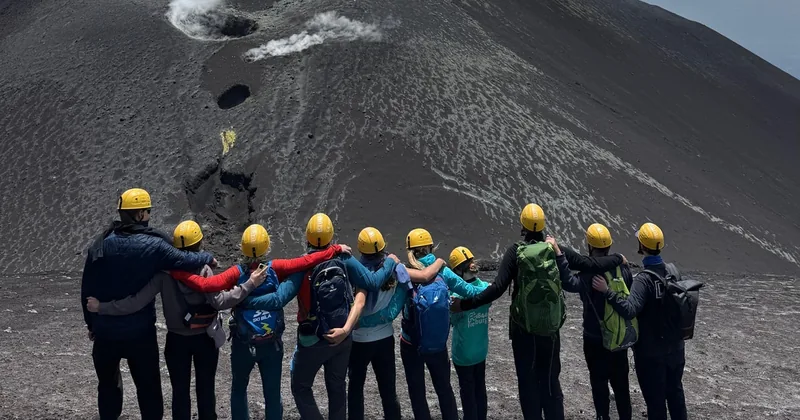
What should you wear and bring for an Etna hike?
Ankle boots, long trousers, warm layers, a windproof jacket, a hat, gloves, sunglasses, water and food. Most guided summit hikes lend boots, a jacket and the helmet.
- Boots: ankle boots with a firm sole. The 3,000 m trek lends boots, long socks and poles; on the flagship hike, boot rental at the meeting point is extra.
- Layers: a warm fleece and a windproof jacket, even in August, plus a hat and thin gloves.
- Long trousers: they keep the ash out of your boots and are required on several treks.
- Sun: sunglasses and sun cream, because the sun burns quickly at altitude.
- Water and food: a litre or more of water per person and a snack, carried from the start.
- Helmet: the guide hands you one; it is mandatory in the summit zone.
No lifts, no crowds: a naturalist guide, about 550 m of ascent from 1,850 m, the Silvestri craters and a lava cave when the volcano is quiet.
Check dates for the trek beyond the tourist trailsIs it worth climbing Mount Etna?
Yes, for most fit walkers. Walking on a live volcano among steaming vents and young lava, with Sicily spread out below, is a day few hikes in Europe can match, as long as you accept that the volcano sets the route.
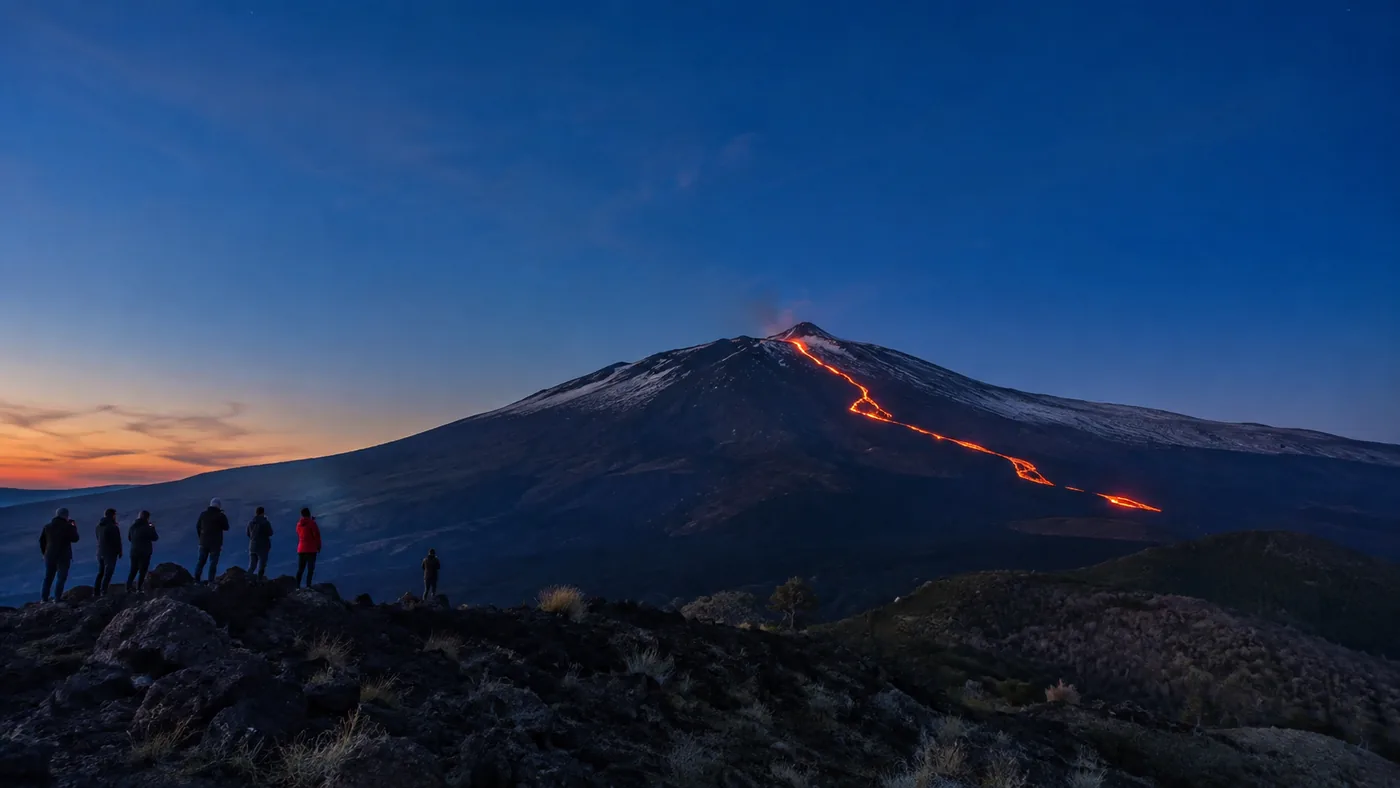
Go with the right expectations. No tour can promise the summit craters: when the regional civil protection raises the alert, every summit excursion stops, guided ones too, and guides turn round at 3,000 m or lower, or move to the other side of the mountain. In summer 2026 the whole summit zone was closed on 13 August, and the Northeast Crater was emitting ash from 24 September. On the September days when treks did run, some groups were switched to the north side.
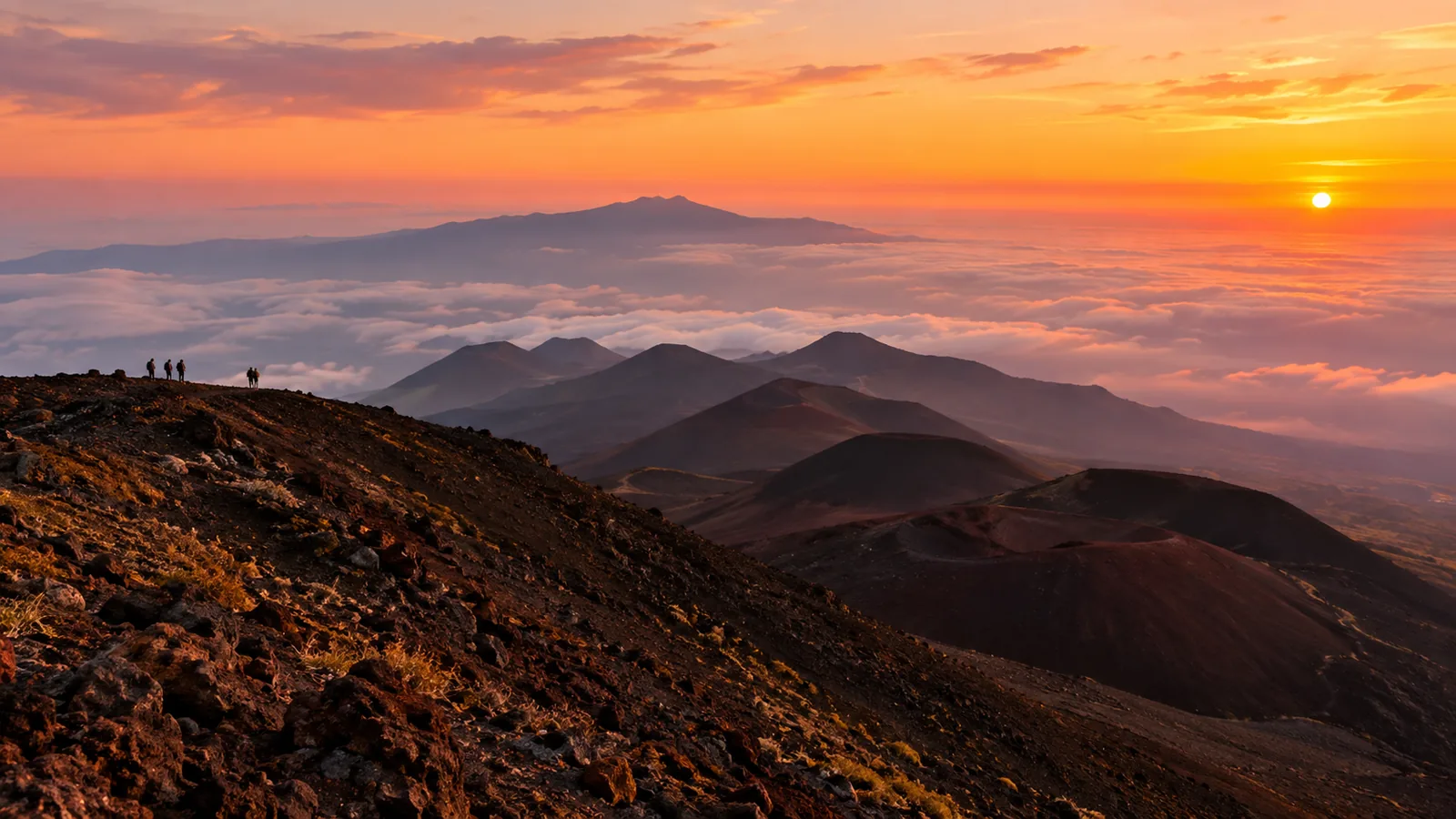
Even on a lower route, the 3,000 m area with the Barbagallo craters of 2002 and 2003, the lava channels and the views over the Valle del Bove is worth the day. If you only want a taste, the Silvestri craters next to Rifugio Sapienza need no ticket and take under an hour. For the lifts that start most hikes, read the Etna cable car guide.
Frequently asked questions
Can a beginner hike Etna?
Yes, below the summit zone. The Silvestri craters, the crater walks near 2,000 m and the cable car, 4x4 and guide combination to the 2,900 m area all suit beginners. The summit area needs reasonable fitness.
How many hours does the guided Etna summit hike take?
About 6 hours in all, including about 2 hours on foot from 2,800 m to the summit craters and the descent on volcanic sand.
Do I need hiking boots for Etna?
For anything above the cable car, yes. Most guided summit hikes lend boots, and trainers fill with sand on the descent.
Can I cancel a guided Etna hike?
Yes. Every tour in this guide gives a full refund if you cancel up to 24 hours ahead.
Ready to book
Choose your hike
Check your date and the live price on GetYourGuide; the refund terms are shown on each option.
Etna Guided Summit Hike up to 3,400 m
- A certified volcanological guide
- Choose the 3,000 m trek or the summit trek
- Helmet, insurance and hiking gear if available
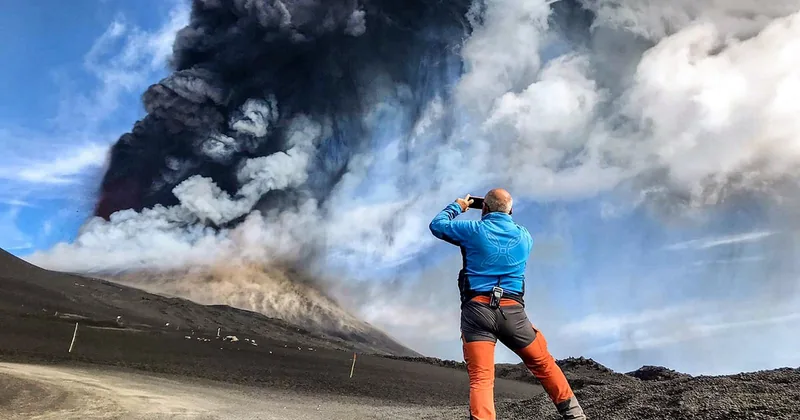
Etna Trek to 3,000 m with Cable Car and 4x4
- An alpine or volcanological guide
- Boots, socks, helmet, jacket and backpack lent
- Barbagallo craters near 2,900 m and a 2002 vent
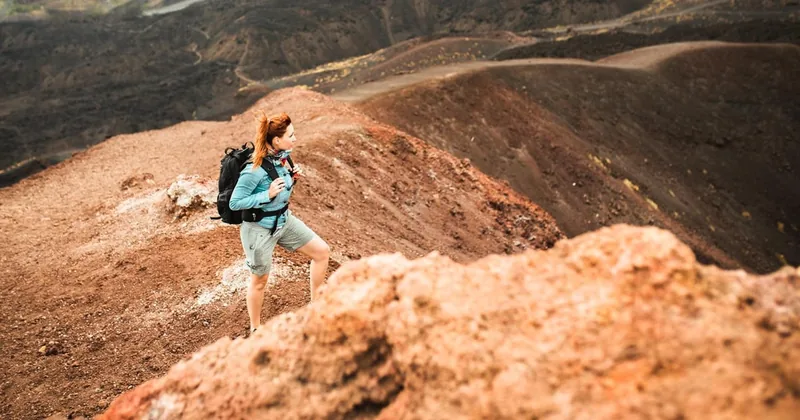
Etna Trek Beyond the Tourist Trails
- A naturalist guide and transfer from Catania
- About 550 m of ascent, up to roughly 2,400 m
- The Silvestri craters and the 2001 lava flow